
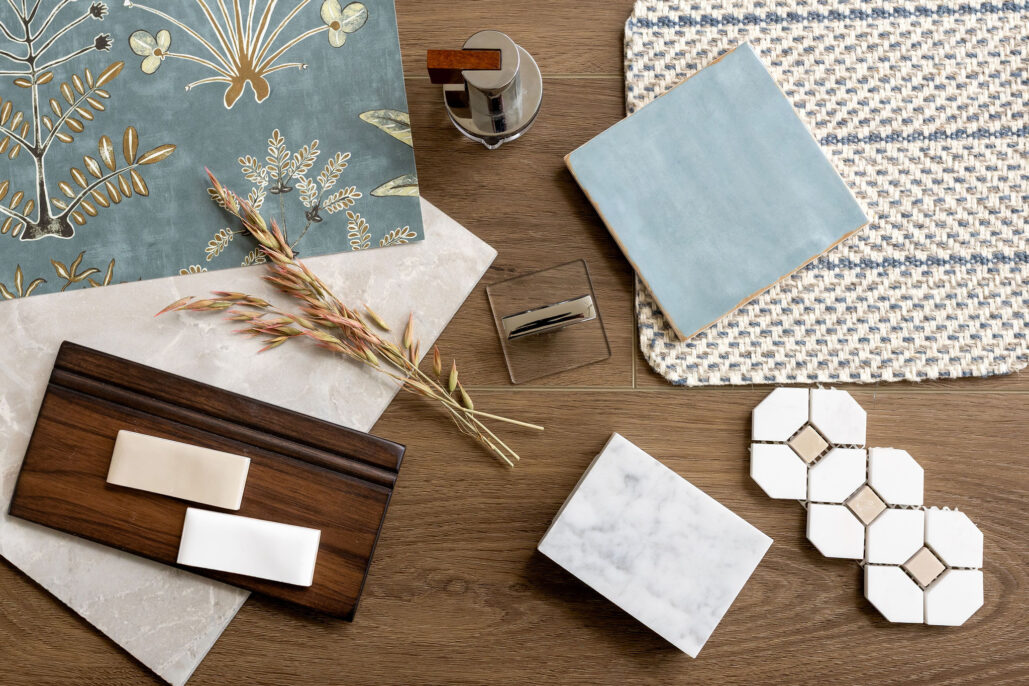
Countertops do a lot of heavy lifting. They need to stand up to daily use, support the overall design of your space, and work within your budget—all at the same time. With so many options available, it’s easy to feel overwhelmed or make a choice that doesn’t quite fit your lifestyle.
Understanding the most common countertop materials—and how they perform—can help you make a confident, informed decision.
Quartz: Durable & Low Maintenance
Quartz is an engineered stone made from natural quartz combined with resins. It’s non-porous, which means it doesn’t require sealing and resists stains and bacteria. Quartz is available in a wide range of colors and patterns, including styles that mimic natural stone.
Best for: Busy kitchens, households that want durability with minimal maintenance, and clients who prefer a consistent look.
Things to consider: It’s not heat-proof, so hot pans should never be placed directly on the surface.
Granite: Natural & Timeless
Granite is a natural stone, meaning every slab is unique. It’s durable, heat-resistant, and brings organic variation to a space. When properly sealed, granite performs well in kitchens and bathrooms.
Best for: Clients who love natural stone and don’t mind a bit of variation.
Things to consider: It requires periodic sealing and may show more movement or pattern variation than engineered materials.
Marble: Classic & Elegant
Marble is prized for its veining and timeless beauty, but it’s also softer and more porous than other stones. It can etch and stain, especially in kitchens, making it better suited for lower-traffic areas or clients who embrace patina over time.
Best for: Bathrooms, baking stations, or clients who value beauty over perfection.
Things to consider: Requires regular sealing and a willingness to accept wear as part of its charm.
Quartzite: Natural Beauty with Durability
Quartzite is often confused with quartz, but it’s a natural stone. It offers the look of marble with greater durability and heat resistance. It’s harder than granite and performs well in high-use areas when properly sealed.
Best for: Clients who want a natural stone look with strong performance.
Things to consider: It can be expensive, and pattern consistency varies by slab.
Need Help Deciding?
If you’re planning a renovation or new build and aren’t sure which countertop material is right for your project, we’re here to help. We guide our clients through the selection process with clarity and intention, so choices feel confident—not overwhelming.
Reach out to learn more about how we approach material selections and support our clients throughout the design process.